
Week 1: Dublin – Where the Numbers Meet the People
iProperty Radio presents Place Engage, a non-political placemaking series across 26 counties throughout the 26 weeks of Ireland’s EU Council Presidency
‘Faigheann cos ar siúl rud nach bhfaigheann cos ina cónaí’
[A walking foot finds something that a resting foot wouldn’t 😉]
Every series has to start somewhere, and this one starts where the pressure is greatest.
Over the next 26 weeks, as Ireland holds the Presidency of the Council of the European Union, Place Engage will undertake a county-by-county listening tour, hearing from people on the ground about placemaking, rural planning, community resilience, and ecology across all 26 counties.
Week 1 is Dublin – across the four local authorities – looking at the data (pictured above) and the stories behind the data; Belonging: Who gets to live where? Who decides?What does it cost them? What kind of places are we actually making?
The placemaking data baseline
Each week, the series collates public and available data to publish a 24-point placemaking data baseline for the county, drawn from primary sources —–the CSO, the RTB, the Department of Housing, Local Government and Heritage, GeoDirectory, and the delivery trackers of the local authorities themselves.
Dublin’s placemaking data baseline includes:
- Housing delivery
- Commencements
- Planning permissions
- Rents
- Tenancy terminations
- Property prices
- Stock and vacancy
- First Home Scheme uptake
- Non-household purchases
The number that frames the decade
One finding stands apart. Under the Section 28 Housing Growth Requirements issued to planning authorities under the National Planning Framework, Dublin’s four local authorities are required to plan for 18,204 new homes per year to 2034.
Against that requirement, Dublin delivered approximately 13,679 homes in 2025 – roughly 75% of the new annual target.
That gap – around 4,500 homes a year – is the distance between what national policy now requires of Dublin and what the capital delivered in the most recent full year. Closing it is the context for every other number in this week’s baseline: the pipeline, the commencement figures, the affordability data, all of it. It is the benchmark this series will carry to every county, because every planning authority in the State now has its own Section 28 figure, and its own gap – or surplus – to explain.
The market on the ground
Data tells you WHAT happened; it rarely tells you WHY.
Through the series’ market intelligence partnership with IPAV – the Institute of Professional Auctioneers and Valuers – each county week includes the view from a practitioner working that market daily.
For Dublin, that voice is Sinead Beggan MIPAV of McGuirk Beggan Property in Terenure who spoke about market conditions across Dublin South, and emerging trends, including:
- Summer market, arriving early: Stock levels are low, as is typical for the season, but ahead of the same period last year. The usual strong run to end-June softened after the June bank holiday, suggesting the summer slowdown kicked in earlier in 2026.
- Who’s buying? First-time buyers and those trading up remain the core of the market, alongside a steady flow of executor sales.
- The changing cash buyer: Cash buyers are increasingly visible and no longer fit the traditional profile. That includes couples in their early 30s buying entirely with cash – and not only in the €350–500k bracket, but at €900k and above.
- A two-speed market: With renovation costs so high, the real competition is for turnkey, well-rated homes, some achieving €100k+ over asking. Properties needing updating are taking longer to sell, with price reductions appearing in some cases.
Notes from North Wall
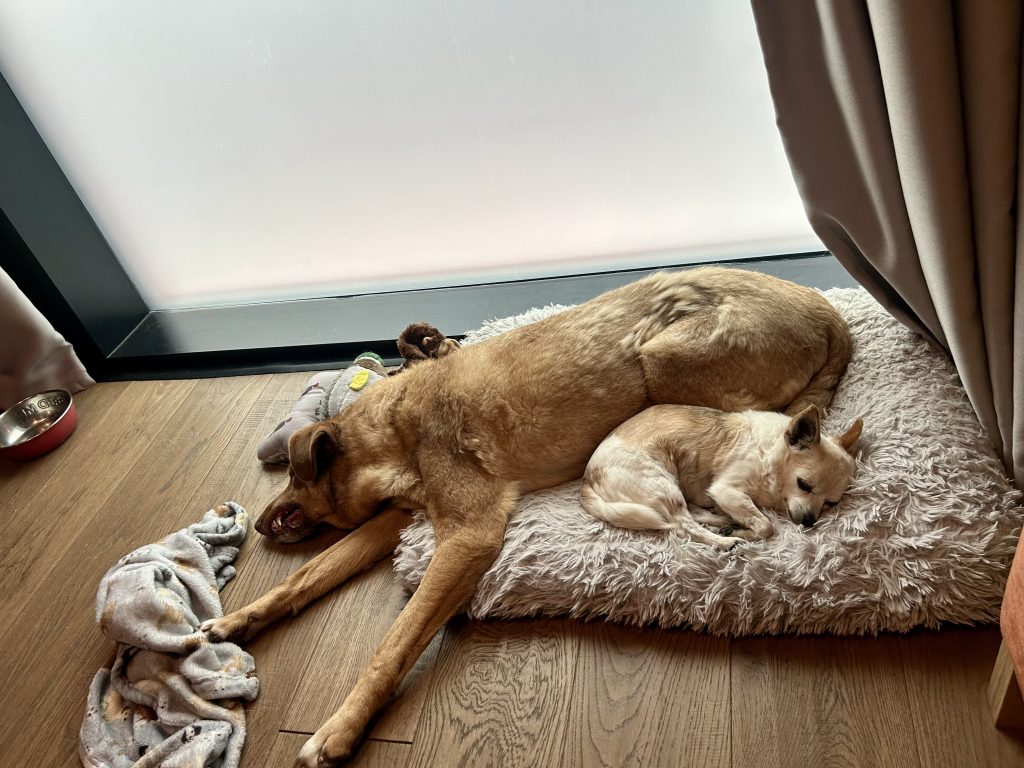
A personal note: I am now based in the West, but I worked in Dublin for years (decades!) and work still brings me back at least once or twice a week, usually to the city centre or the Southside. So for Week 1, I chose to stay half the week at Beckett Locke, at the junction of Mayor Street Upper and North Wall Avenue – the most dog-friendly hotel I have found in Ireland (side note: I am travelling with a mongrel the size of a small donkey, called Rico, who was found down a rabbit warren in the desert in Murcia when we were living there 11 years ago and ended up coming home with us in the back of the car; and an 17-year old, 3kg, deaf and almost blind chihuahua with dementia, called Daisy).
But I learned that a dog-friendly hotel is not the same thing as a dog-friendly place.
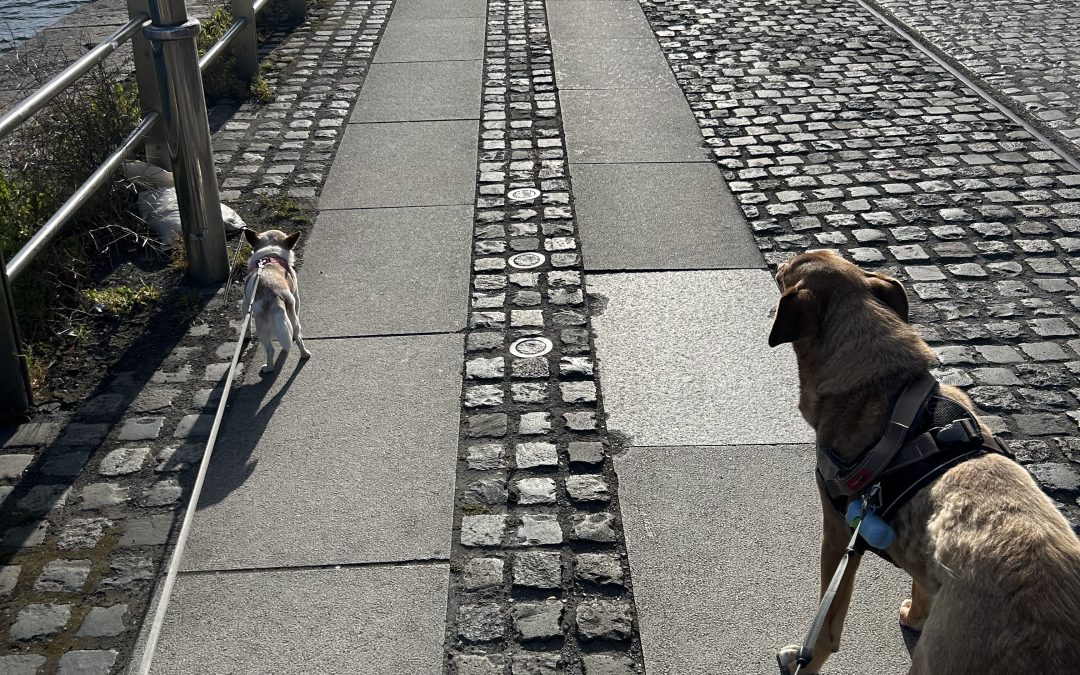
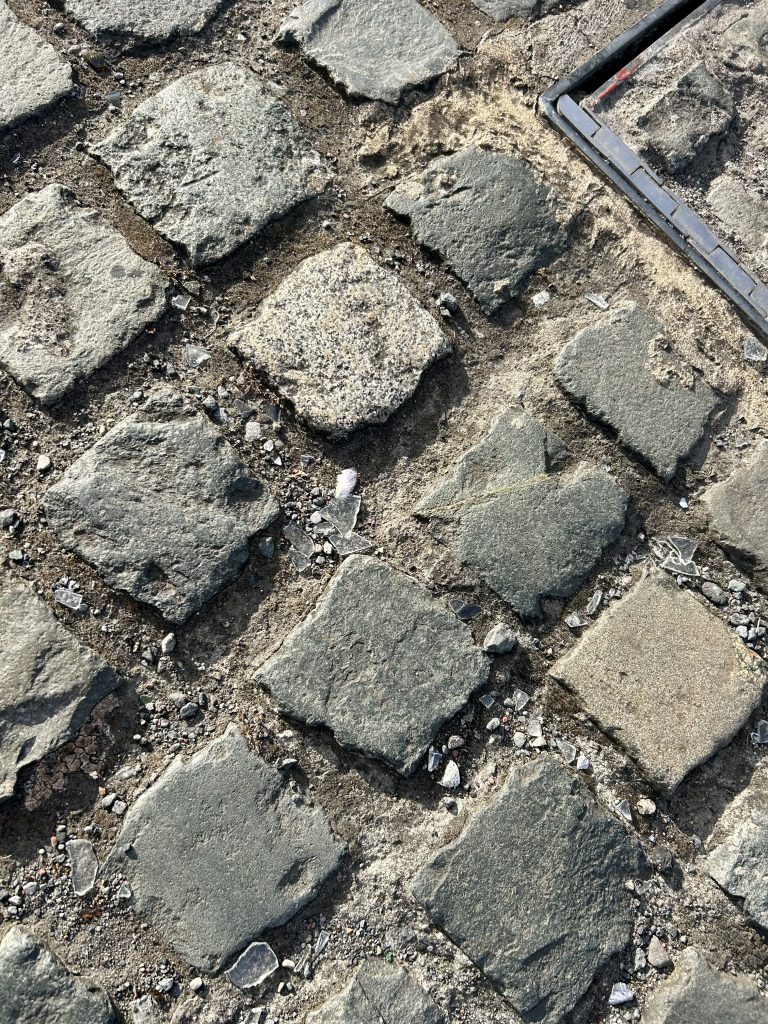
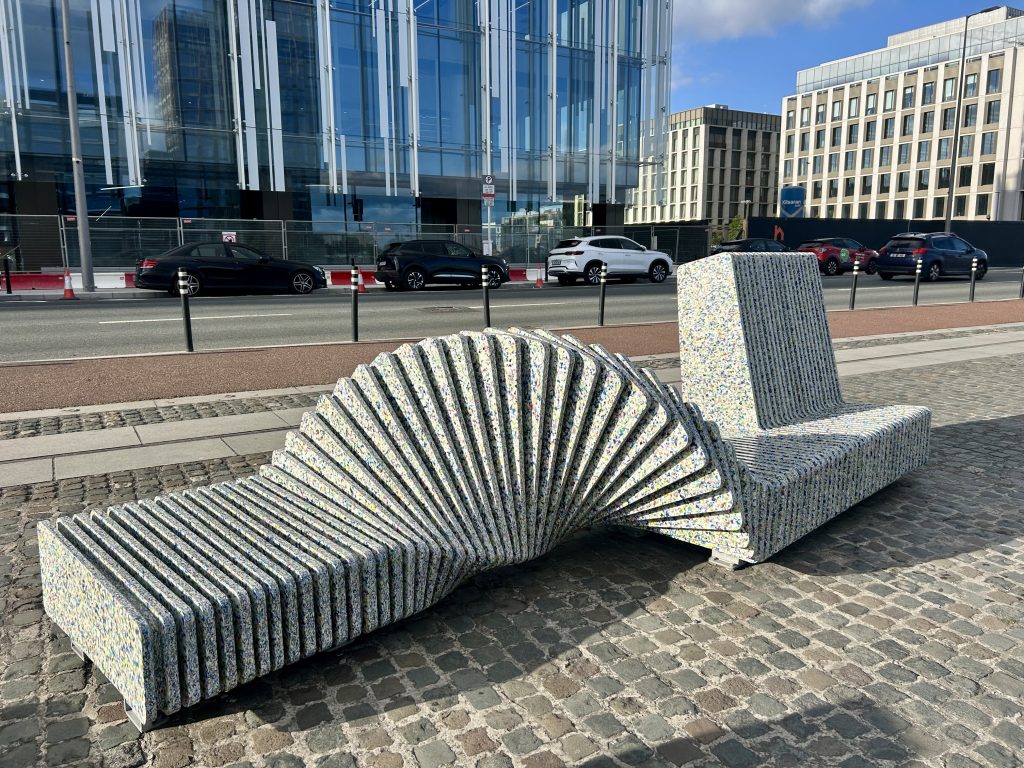
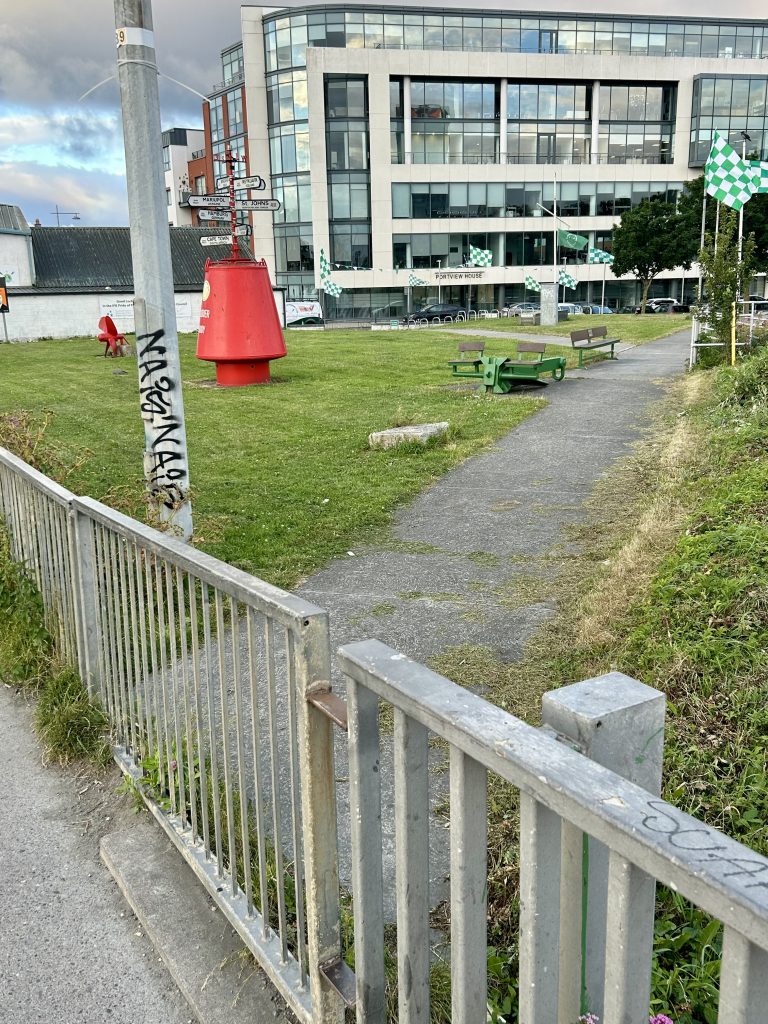
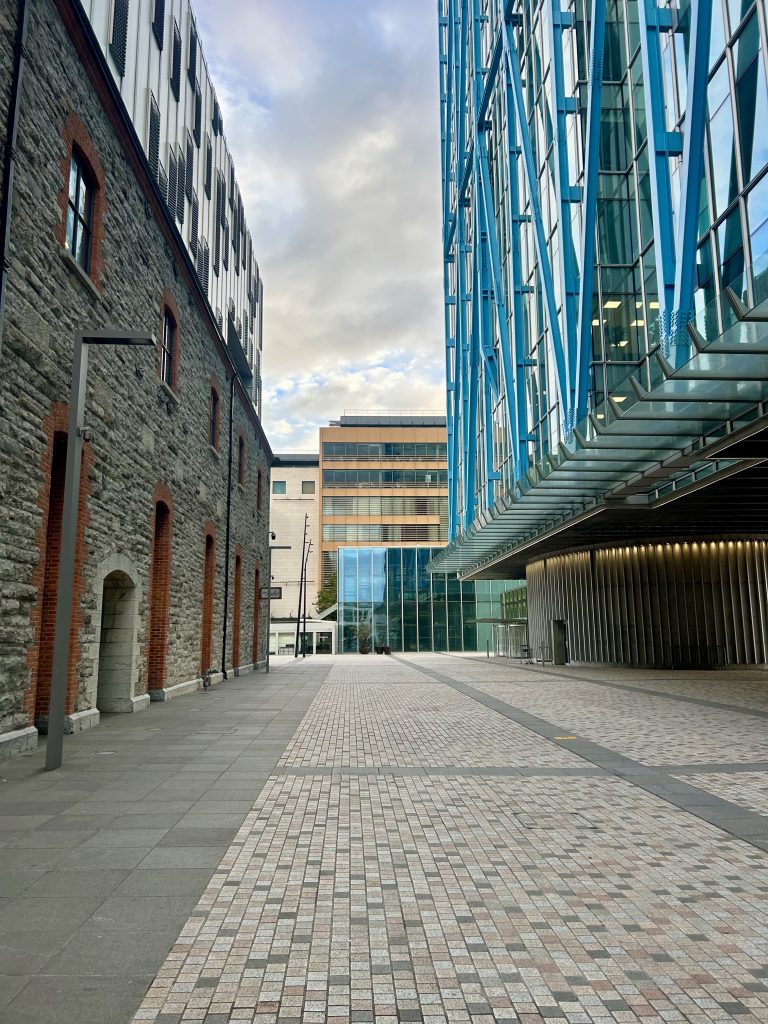
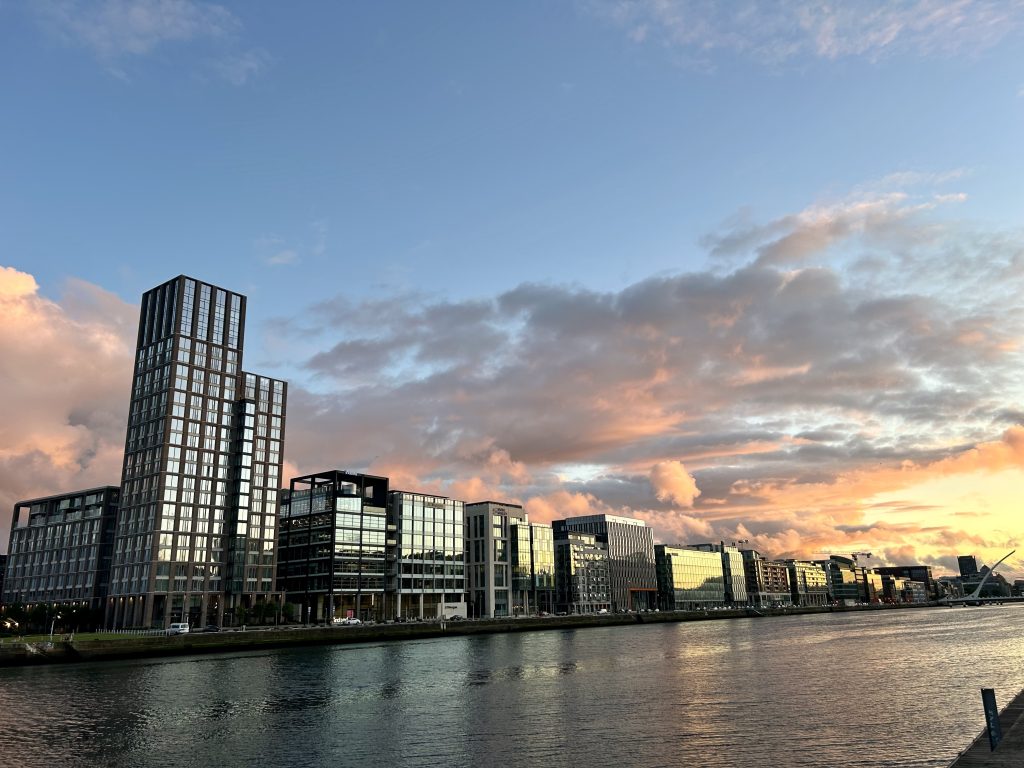
I could not find a blade of grass in the area. Even the trees wear metal frames, and the landscaping runs to raised beds – which, delicately put, does not meet the needs of country dogs. North Wall Quay is a good amenity for people, with plenty of new seating – the recycled wave benches among them – but a no-go path for paws, we discovered, given the amount of smashed glass. After trying along Sheriff Street, we ended up crossing the Tom Clarke Bridge to a slightly greener Ringsend. Incidentally, despite driving that bridge weekly, it was my first time walking it – and the opening section vibrates underfoot so much as lorries pass that my big dog was terrified.
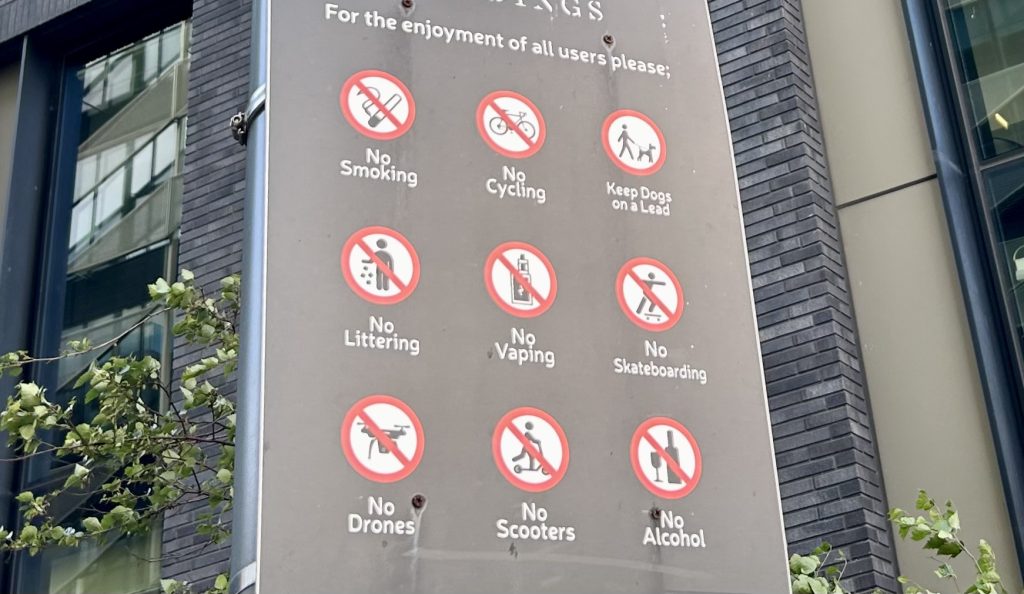
Chatting to people locally, two themes came across very clearly: a strong sense of community spirit, and the belief – the perception – that this is not an inclusive space at all. The us-versus-them was evident in the hostile signage around the residential developments, declaring that everyone is welcome before going on to demonstrate the very opposite.
I will admit I was fuming, and here is why. I remember writing some of the pre-planning and post-construction specifications for some of these schemes, and the language was all about opening shared spaces for the community to integrate and spend time in lush surroundings. Walking through these spaces a decade later, I can only say that we have failed to keep the promises we made to this particular community.
My dogs and I are early risers, so our first walk of the day fell between 5.30 and 6am – which meant I saw parts of life in the area I might never otherwise have experienced, including the huge rigs delivering monster stage setups to the 3Arena. The sheer efficiency of the traffic management and policing there blew my mind, particularly after spending much of Sunday stuck on the roads around Croke Park following the Dublin v Galway game (Dublin fans, it should be said, were very gracious!).
On two of those early mornings I met the same two people on the benches at Point Square. One lady took a particular shine to Rico, so we had the chance to chat about why we were each there, and I asked her about her experience of the place. I did not ask whether she was homeless, and she did not tell me. She was upbeat, but she told me – with more sadness than anger or bitterness – it was not the same as it used to be – pointing to the huge development site on the opposite corner.


Community voices
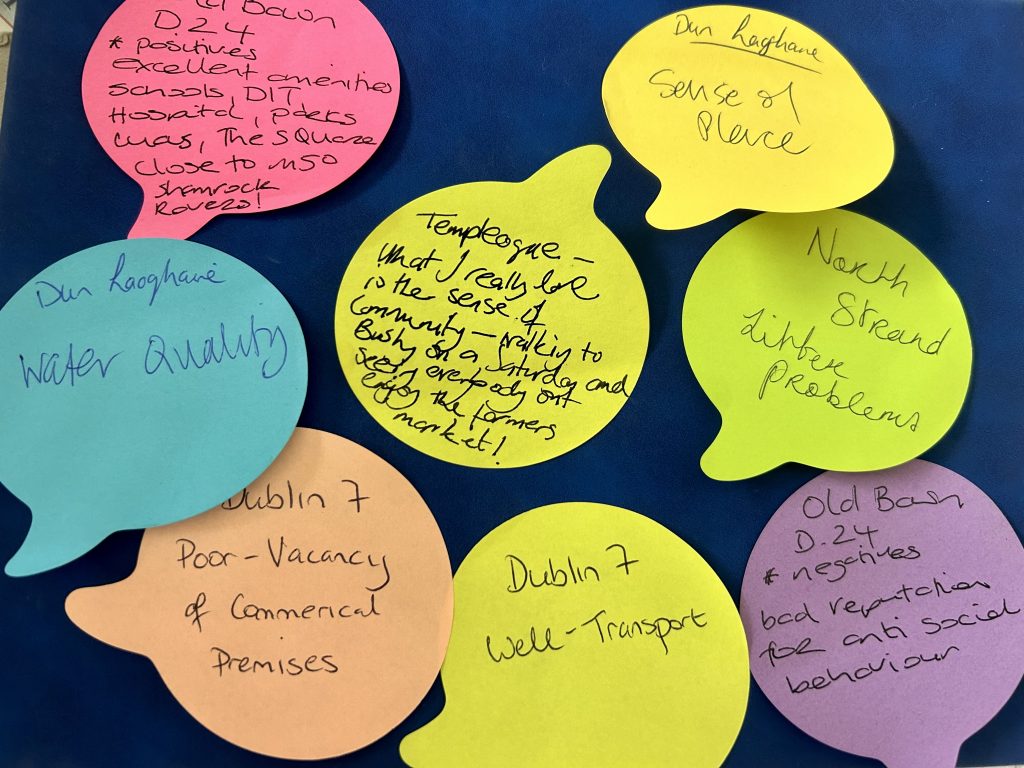
Numbers describe a county; people describe a place. Through the week we asked Dubliners we met a few simple questions, which most answered on post-it notes that we are collating and recording.
Here are a selection:
Place, land, and canopy
Placemaking is not only a housing question. The Living Land Phase 2 Land Use Review, published this week, includes county-level land use data with direct relevance to how Dublin grows. As the series moves through the 26 counties, this land use evidence will sit alongside the housing baseline – because the question of where homes go is inseparable from the question of what the land is already doing.
A note on what we could not count
One data point is missing from this week’s baseline, and its absence is itself a finding. Planning refusal rates – once published annually per local authority as open data (up to 2011/2012) – can no longer be easily tracked. A figure that allowed the public to compare how planning authorities exercised their most consequential power has quietly fallen out of routine publication.*If this is gap in our research rather than a gap in the public record, please let me know and I will be happy to correct/clarify: carol@placeengage.com
Next week
Next stop, Tipperary – email carol@placeengage.com to get involved.
Data sources for Week 1: CSO; RTB; DHLGH Monthly Commencements (to May 2026); GeoDirectory; First Home Scheme; Housing Delivery Tracker (Dublin City Council, Fingal, South Dublin, Dún Laoghaire-Rathdown); Section 28 NPF Housing Growth Requirements; CSO Planning Permissions Q1 2026; CSO Residential Property Transactions by Non-Households 2025; Living Land Phase 2 Land Use Review (July 2026). Full source list and reference periods at www.placeengage.com.
Place Engage property market overview is provided in partnership with IPAV, the Institute of Professional Auctioneers and Valuers.