

Ireland’s ‘Planted’ Gaeltacht: why we are not ready to tell this story yet
Ireland’s smallest Gaeltacht sits in the middle of County Meath, and it exists only because the State moved – or “planted” – people there.
Before I moved to the Gaeltacht in Connemara, I had a vague awareness of a Gaeltacht at Ráth Chairn, but no real knowledge or context about how it had come to be.
Since moving to Connemara it comes up, and it comes up in a particular way. Neighbours travel to County Meath for funerals – curiously, never for weddings or happier occasions – and the conversation is always about the terribleness of it: of families “sent” east, of a “planted” Gaeltacht. And that was really all I knew of the Gaeltacht in Meath.
On the ground in County Meath this week, as part of our 26-county, 26-week non-political placemaking tour of Ireland for the duration of Ireland’s EU Council Presidency, it became clear very quickly that I personally do not have the depth of understanding to discuss the concept of place with the families who moved. So rather than try to understand or package ninety years of a community’s history, we are doing something else. Over the coming months, a Connemara man will host a conversation – through Irish – with family members in County Meath, and we will publish it [links to follow].
But we cannot talk about a sense of place in County Meath without including Ireland’s ‘Planted” Gaeltacht…
A word on the term itself. “Planted Gaeltacht” is common usage – I have heard it used in Connemara, and it appears in commentary and tourism copy – but it is not the language used by official Ireland.
What the official record shows
The Meath Gaeltacht is made up primarily of two villages, Ráth Chairn and Baile Ghib, both close to Navan in the centre of the county. Údarás na Gaeltachta records it as the smallest Gaeltacht area in the State: a geographical area of 44 km², equivalent to 1% of the total Gaeltacht land area, with a population of 1,857 at the 2016 census, or 1.9% of the total Gaeltacht population.
Set that against the rest of the Week 8 file. Forty-four square kilometres is less than 2% of County Meath’s land area, and the Gaeltacht’s Census 2022 population of 2,093 is under 1% of the county’s 220,826 population. This is a very small area carrying a statutory language designation inside a county better known in this series for the longest commute in Ireland.
Three migrations, not one
The record describes at least three distinct Land Commission movements into Meath, with different origins, different years and different outcomes. Conflating them – which the shorthand “the planted Gaeltacht” tends to do – loses most of what matters.
Ráth Chairn, 1935:
Comharchumann Ráth Chairn records that the Gaeltacht was established in 1935 when 27 families from Connemara, mostly from Ceantar na nOileán, were settled on land previously acquired by the Land Commission. Each family received a Land Commission house, a farm of approximately 22 acres, a horse, a sow and piglets, and basic implements. A further 11 families joined in 1937. In all, 443 people moved from Connemara to new holdings in the Ráth Chairn area across that period. The only communal building provided was a national school, Scoil Uí Ghrámhnaigh, still in use; otherwise, in the Comharchumann’s own words, the new community was left to fend for itself.
The history is conflicted. Rather than the narrative of people being “sent”, RTÉ’s archive of a Féach report with two of the men who made the journey east records that the settlement followed a long campaign by Irish speakers in Connemara – the writer Máirtín Ó Cadhain among them – seeking a viable economic future on land acquired by the Land Commission.
Also, curiously, official Gaeltacht recognition for Ráth Chairn did not come until 1967, and then only after a civil rights campaign organised locally by Craobh Cearta Sibhialta na Gaeltachta Ráth Cairn. Comharchumann Ráth Chairn itself was founded in 1973.
Baile Ghib, 1937 and 1939:
Meath County Council’s development plan written statement for Baile Ghib records that 52 families settled in the townland of Gibbstown in 1937, followed by a further 9 families in 1939 who settled in Clongill, amounting to 373 in total. These migrants came from the Mayo, Kerry, Donegal and Cork Gaeltachtaí – a genuinely multi-origin community, and one whose street names still carry it: Donegal Road, Mayo Road. Contemporary reporting on Ceann Scríbe Baile Ghib / Destination Gibbstown, written by children of the first migrants, records the first migrants travelling on 10 March 1937, from Fanad and Gweedore in Donegal, Belmullet and Tourmakeady in Mayo, Ballinskelligs and west Kerry, and the Beara peninsula in west Cork, to land at Gibbstown where the Gerrard estate was being divided. All were native Irish speakers, many with no English.
Allenstown, 1940 – the one that did not survive:
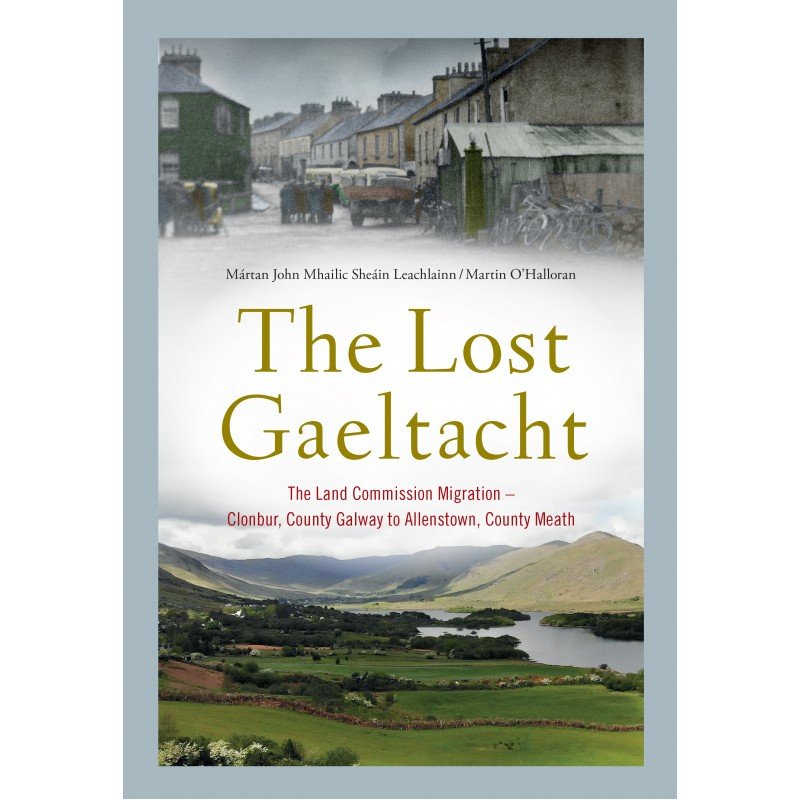
This is the migration Martin O’Halloran’s The Lost Gaeltacht documents. On 29 March 1940, 24 families/127 people boarded two buses in Clonbur, County Galway, their livestock and possessions following on thirteen lorries, to take up holdings at Allenstown, County Meath. The resettlement was designated by the Land Commission as Gaeltacht Colony Number 5. The families at Clonbur had been tenants of the Ardilaun (Guinness) estate.
The distinction that matters for a placemaking series is this: Ráth Chairn and Baile Ghib remain the statutory Gaeltacht. Allenstown is not a Gaeltacht. The colony was, in O’Halloran’s own characterisation, a significant internal migration that failed through “political misadventure, abandonment and administrative indifference” (as quoted to a book reviewer in 2020). Same policy, same decade, same county – and one of the three outcomes is a functioning bilingual community with a co-op, two schools and a festival calendar, while another is a place-name.
The reception, and why it is uncomfortably familiar
The publisher’s description of The Lost Gaeltacht records that the Clonbur families made the journey in the face of fierce and at times vitriolic opposition in Meath, with slogans painted on roads and rooftops: ‘no migrants here’; ‘the Meath land for the Meath men’; ‘migrants are not welcome’.
In the Castle Bookshop podcast interview, O’Halloran – himself a child of the migrants, born in Allenstown in 1956 – sets that hostility against what followed: https://youtu.be/zvN4SvhL_uI?si=e00G1TMi_UXg3u1x
His account is that the agitation was loudest before arrival, driven by political lobbying at local level, and that the lived experience afterwards was different: local families holding out a hand, telegrams sent ahead so neighbours from Gibbstown could cycle over and light the fires before the buses arrived, a court case running a year and a half after a skirmish on a football pitch, and then – within a year – young people from east and west meeting at a dance and local witnesses developing a sudden inability to identify anybody.
*Of relevance to placemaking today, he is direct about the parallel to Ireland’s present debate on inward migration, and equally direct about what he thinks the lesson is: consultation, engagement, and the removal of fear, on the basis that local communities very often do the right thing when they are actually part of the process.
Where the language stands now
The most recent authoritative figures are from Census 2022 (CSO Profile 8, published 19 December 2023), and they are more interesting than a simple decline story.
The population of the Meath Gaeltacht increased from just over 1,850 in 2016 to 2,093 in 2022. Of those, 1,989 were aged 3 years and over, and 1,179 of them could speak Irish – an increase of 117 people who could speak Irish, or 11%, which the CSO records as the second highest rate of increase in Irish speakers of any Gaeltacht area.
Underneath that, the frequency figures move in two directions at once. The number speaking Irish daily both within and outside the education system fell from 92 to 71. But the number speaking Irish daily outside the education system only rose from 191 to 205, and weekly speakers outside education rose from 111 to 123. On fluency, 425 people spoke it very well, 344 well and 394 not well.
205 daily speakers outside the education system is about 10% of the Gaeltacht population aged 3 years+. 90 years on from the first buses, in the smallest Gaeltacht in the State, one in ten residents is using the language daily outside a classroom, and that number went up rather than down.
My personal placemaking interest in this…
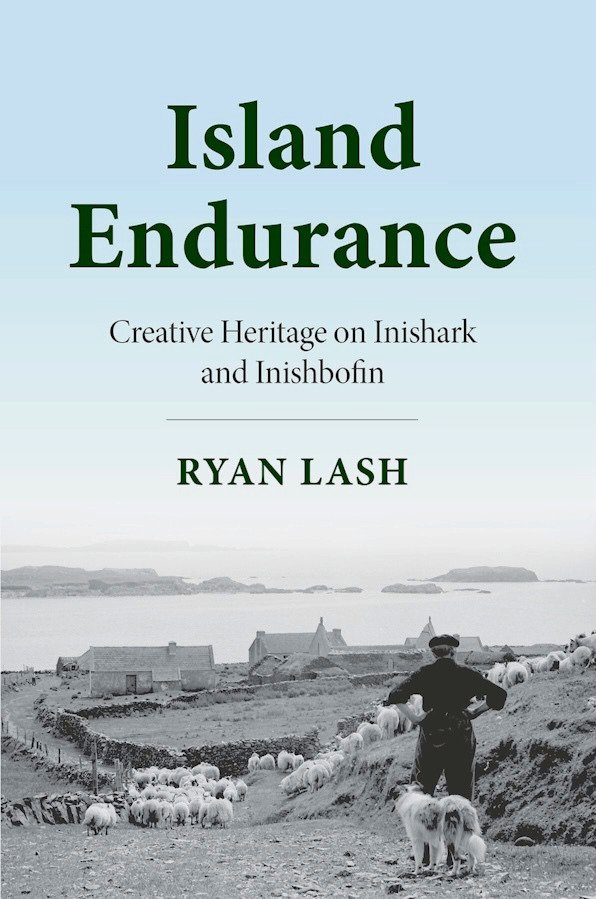
- One: this is the most complete State-directed placemaking experiment in modern Irish history, and it is still standing: New settlements, allocated land, built houses, a school as the sole piece of communal infrastructure, and an explicit cultural objective. Every question this series asks about whether national instruments reach the ground – Town Centre First, vacant property grants, Urban Development Zones – was asked here first, in the 1930s, with a 90-year answer available. Two colonies persisted and one did not – it raises similar questions to those raised by academic author Ryan Lash, ‘Island Endurance’: https://caroltallon.com/taskscapes-island-endurance-a-new-future-for-inis-oirr-lighthouse/
- Two: it is a case study in consent and capacity: Ráth Chairn came out of a campaign by Irish speakers themselves, and had to campaign again for thirty-two years to be recognised. Baile Ghib drew families from four counties into one townland. Allenstown, on its chronicler’s account, was left to fade. The difference does not appear to be the quality of the land or the size of the grant. It looks a great deal like the presence or absence of sustained institutional support and organised local capacity – which is precisely what the Kilkenny week concluded about the James Hoban memorial, and what I have consistently found to be the weakest part of Ireland’s placemaking puzzle: https://placeengage.com/%f0%9f%93%8daccidentially-finding-the-spirit-of-place-on-our-placemaking-exploration-of-county-kilkenny/
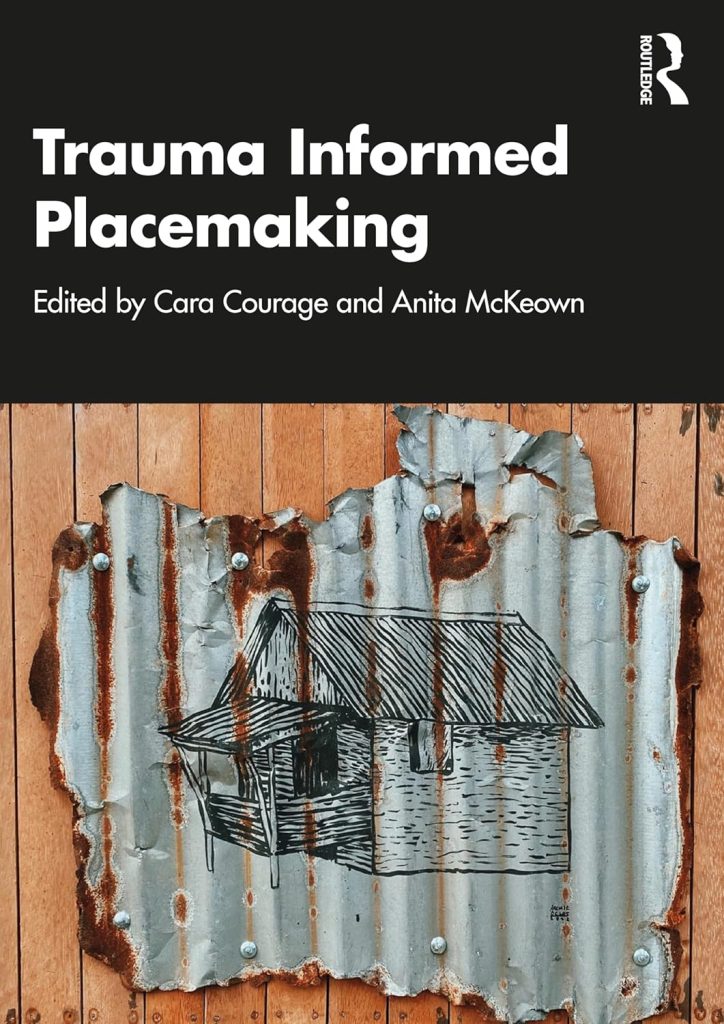
- Three: it raises the question of trauma-informed placemaking: If a community’s founding event was an uprooting – and if, ninety years later, the conversation in Connemara still runs through funerals – then the ordinary tools of consultation are not obviously adequate. Whether Irish planning and placemaking practice has any concept of working with communities whose relationship to place begins in loss is something I intend to pursue properly, with people qualified to answer it: https://caroltallon.com/when-planning-becomes-re-traumatisation-the-case-for-trauma-informed-placemaking-in-ireland/
Coming later, and properly
We will return to this. Not in a weekly article and not from a Placemaking Data Baseline number, but as a conversation in Irish, hosted by a Connemara man, with family members in County Meath – people whose parents and/or grandparents were on those buses, talking to people whose neighbours watched them go.
If you are connected to Ráth Chairn, Baile Ghib or Allenstown, or to the western communities the families left, and you would like to be part of that conversation, I would be glad to hear from you: carol@placeengage.com
Further reading, and a request
Martin O’Halloran, The Lost Gaeltacht: The Land Commission Migration – Clonbur, Co. Galway to Allenstown, County Meath (Homefarm Publishing, 2020). A demanding read in parts and a generous one throughout. If you are buying it, please buy it from a County Meath bookshop – Antonia’s in Trim stocks it: antoniasbookstore.com
RTÉ Archives holds several relevant items, including a 2015 piece marking eighty years of the Ráth Chairn Gaeltacht: rte.ie/archives
Comharchumann Ráth Chairn publishes the community’s own account of its history at rathchairn.com
Place Engage is a non-political placemaking series running across all 26 counties throughout the 26 weeks of Ireland’s EU Council Presidency, brought to you through iProperty Radio. Corrections and contributions are always welcome: carol@placeengage.com