
🇪🇺 Week 15 of 26: Placemaking in County Limerick
Opportunity Where You Are
“Faigheann cos ar siúl rud nach bhfaigheann cos ina cónaí” – a walking foot finds something the resting foot never would.
🇪🇺 Week 15 of 26: Place Engage arrives in County Limerick – home to the State’s third city, a deeply rooted county population, and a regeneration story still being written. In Croom the homes were freshly painted and the gardens cared for, yet almost every shop unit stood empty. In the city, 119 council homes are reported vacant, some for more than a decade. And the week’s framing came from a sociologist speaking in Cork: when people cannot move to opportunity, opportunity has to be created where they are. Like our analysis of it, Limerick left me with the sense of a place unfinished – a city that has not yet scratched the surface of its potential.
209,536 people, up 8% since 2016 · 69% born in the county · median achieved house price €310,000 (~21% below national) · new-tenancy rent €1,744, up 16.3% in a year · the widest gap in the State between new and sitting tenants’ rents, 47% · 185 completions last quarter, ~2.1% of national output from ~4.1% of the population · commercial vacancy 18.1% · 71 homes to rent long-term against 447 entire homes on Airbnb on 11 October.
Through iProperty Radio, Place Engage is undertaking a non-political placemaking series across 26 counties throughout the 26 weeks of Ireland’s EU Council Presidency. Each county week builds a Placemaking Data Baseline from primary sources before we arrive, and then our time on the ground is spent listening to people and exploring where the published record tracks lived experience, and where it diverges.
*A note before we start: Limerick, city and county, is where we spoke to the fewest people of any week so far – weather, time of day and time of year all played a part – so we are particularly keen to hear from residents: carol@placeengage.com
A personal note before the data
I lived in North Kerry for many years (before motorways!), and the road into Limerick was a familiar one: from Tarbert and Loughill through Glin, then up the N69 through Askeaton and Kildimo into the city. On our Kerry week only recently, we came the other way, from Abbeyfeale northwards through Adare. So this week I decided to begin away from those well-worn routes, in Croom.
A word on the shape of this article. Because we spoke to fewer people here than anywhere else so far, more of what follows is observation and published record than conversation.
This is an incomplete account of Limerick, and it may be fitting that it is, for the city itself feel incomplete. Unfinished. Not quite meeting its potential.
Notes from Croom
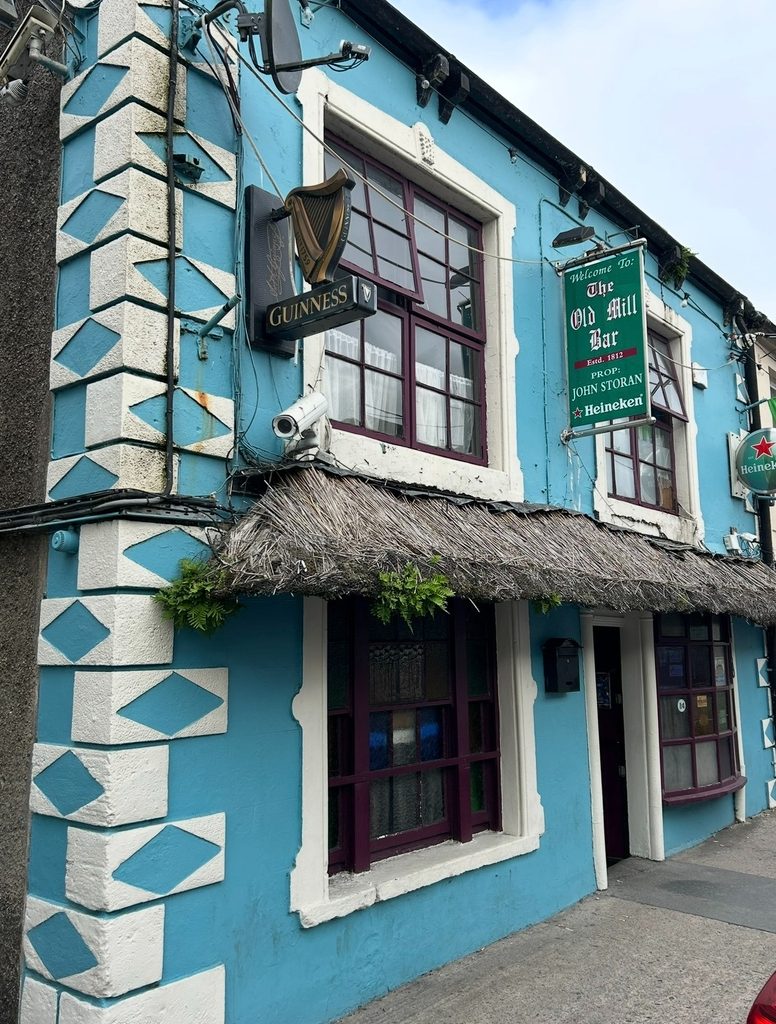
Croom – Cromadh, the bend in the river – sits on the Maigue. Its mill was built in 1788 by Henry Lyons on a site milled since the fourteenth century, and it worked until 1927 (Limerick Diocese Heritage Project). Beside it, The Old Mill Bar dates back to 1812, and its doors are still open.
The village was relatively busy with ordinary life. People were kayaking on the river. There is a Scouts’ den and community gardens, both busy, but my arrival in the village coincided with the end of the primary school day. The homes were noticeably freshly painted, well planted and cared for.
Yet almost every retail unit was empty.
That gap between cared-for homes and an empty commercial street is something the published record also shows at county level. GeoDirectory’s Q2 2026 report put commercial vacancy across County Limerick at 18.1%, against 14.5% nationally, with Newcastle West at 24.3%. No Croom-specific figure appears in the coverage located, so the village street is an observation, not a statistic.
On the edge of the village a large medical facility is under construction, across from a historic but derelict building. Croom is already home to Croom Orthopaedic Hospital, and local reporting describes a cluster of new investment around it at Skagh: the primary care centre, currently under construction, a €20m secondary school building, and permission for a 91-bed nursing home with 32 independent-living bungalows on a greenfield site on the village outskirts. That is a lot of civic investment arriving in one village. The placemaking question it leaves is how the main street – a short walk away – shares in it.
Meanus, Bruff and Lough Gur
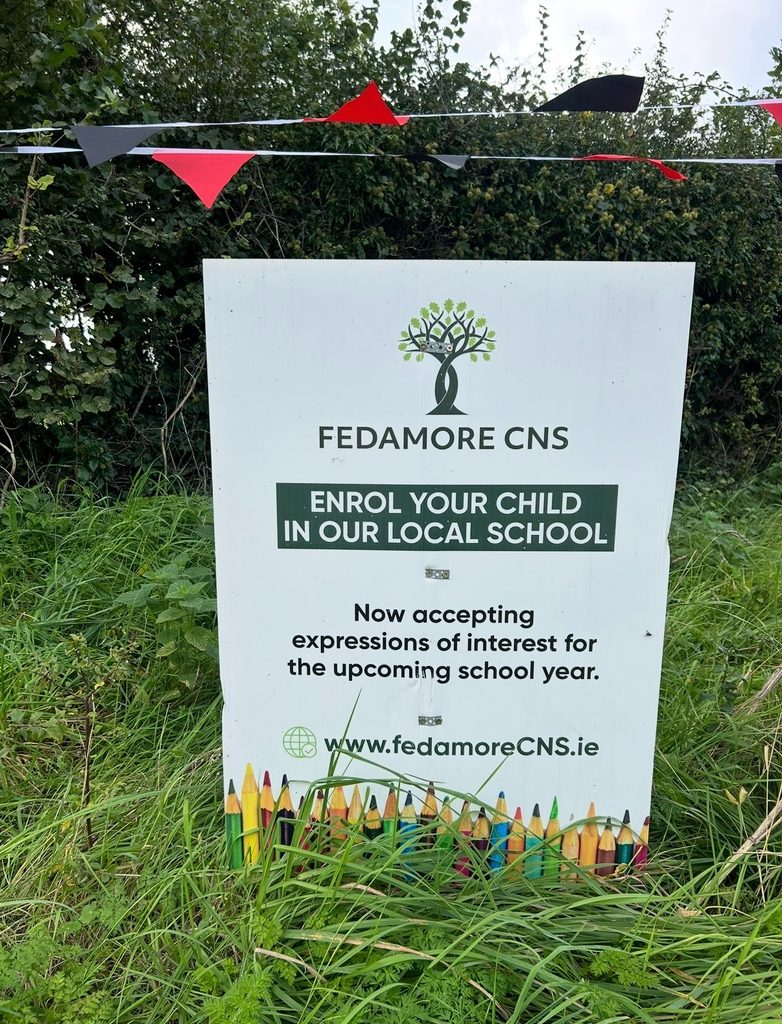
In Meanus the community spirit was visible from the road: signs along the way called on families to keep their children in the local school. In a small rural community a school is often one of the last pieces of civic infrastructure, and the signs read as a community standing up for it.
I passed Old Irish Ways, the privately run folk museum at Cahirguillamore near Bruff, but did not have the chance to call in. The Irish Examiner recently reported that it receives no funding and that visitor numbers have fallen sharply, so it is on the list for next time, and it is another version of the question Kilkenny raised: who keeps a place’s heritage going when it rests on one person’s effort.
I did take the opportunity to visit Lough Gur. Despite living in North Kerry for many years, it was my first time at the Grange Stone Circle, and it is something special to behold. Heritage Ireland describes it as the largest stone circle in Ireland: around 4,000 years old, made of 113 contiguous standing stones, with its stones and entrance aligned to sunset at Samhain. It is a State-owned National Monument in the care of the Office of Public Works.
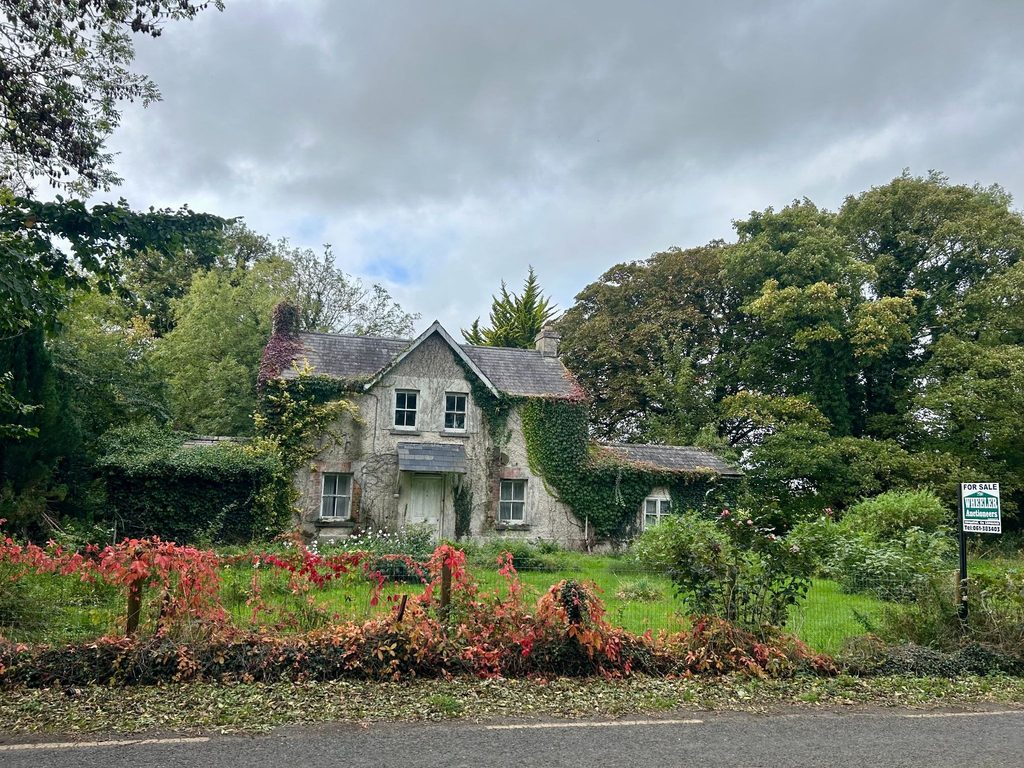
Driving from there towards the city, I passed a house so striking in its autumn garden that I turned the car around to go back for a better look. It turned out to be the old school house in Meanus, for sale with Wheeler Auctioneers at an asking price of €250,000. A quick video clip posted to iProperty Radio went viral. Best wishes to whoever secures it – in the same community whose roadside signs are asking families to keep the next generation in the local school: https://www.facebook.com/share/r/1LkLEZp4N7/?mibextid=WC7FNe
What the baseline told us before we arrived
On the published record, Limerick is priced as a regional county to buy and close to a commuter county to rent. The full Week 15 baseline and infographic are at placeengage.com; four findings matter most here.
- A rooted city-region: County Limerick had 209,536 people in April 2022, up 8% since 2016, CSO.. Some 69% were born in the county, the highest of the five counties the series has compared on this measure, and those born abroad (17%) now outnumber those born elsewhere in Ireland (14%).
- Buying and renting tell different stories: The median achieved house price was €310,000 in 2026 to date, about 21% below the national €390,000 (HousePrice.ie’s county page for Limerick, drawn from the PSRA Residential Property Price Register; data updated 1 October 2026). These are achieved prices – what buyers actually paid – not the asking prices in the Daft.ie snapshot below. The year-to-date median sits 2.6% below 2025’s, but that compares a part year with a full year, and a block of same-day apartment registrations can move it; it should not be read as falling prices until tested with local agents.
Rents run the other way. New tenancies averaged €1,744 a month in Q1 2026, up 16.3% in a year and only about 5% below the national €1,839, and the RTB states that Limerick has the largest gap of any county between new and existing tenancy rents: new tenants pay 47%, or €558 a month, more than sitting tenants. In Limerick City, new-tenancy rents reached €1,921, up 20.9% – the largest annual increase of the five cities – and 52.3% above what sitting tenants pay.
- Building below its weight: Limerick completed 185 new dwellings in Q2 2026, about 2.1% of national output from a county holding about 4.1% of the population. The pipeline is stronger: 1,188 new residential address points in the year to June 2026, more than double the 544 a year earlier.
- Few homes to rent at all: On a live capture on 4 October 2026 there were 480 homes for sale and 71 to rent long-term across the county – 57 of them in Limerick City and 14 outside it – against 447 entire homes on Airbnb. That is roughly six visitor homes for every long-term rental, and one rental listing for about every 2,950 residents. Limerick’s problem is less visitors displacing residents than how few homes are offered to rent in the first place.
Council homes standing empty
In the local news this week… Figures provided to Cllr Sarah Beasley and reported by the Limerick Post show 119 council homes vacant across the Limerick Metropolitan area: 53 in City North, 35 in City East and 31 in City West. The longest-vacant, on Lenihan Avenue, has been empty for 11 years and five months and is not expected back in use until December 2028. For 44 of the 119, no completion date has been confirmed.
The Council’s explanation, as reported, is that a number of these homes were recently acquired or sit within designated regeneration areas. They are eligible for capital funding under SHIP Renew, SHIP LA-Led Buy and Renew, and Estate-Wide Regeneration Works, and funding applications must be approved by the Department of Housing, Local Government and Heritage before refurbishment can begin.
This is not a question of one council’s performance: the same sequence of acquisition, application, approval and refurbishment applies to every local authority. It is, though, the clearest local example this week of the point we made in Kilkenny – the instruments exist, and the question is how long they take to bite. In a city where 57 homes were advertised to rent privately on a single October day, a boarded-up council home on a residential street is a real loss for the community.
Understanding Limerick: opportunity where you are
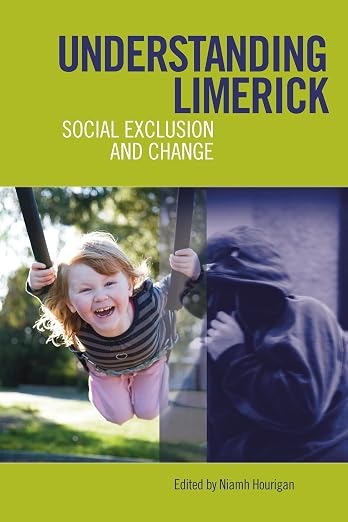
For years, one book has been a Limerick placemaking resource at Place Engage HQ, supporting both our public- and private-sector placemaking and regeneration work, and our New European Bauhaus training: Understanding Limerick: Social Exclusion and Change (Cork University Press, 2011), edited by Niamh Hourigan. It brings together academics and policymakers in sociology, social policy, criminology and urban geography to explain how severe social exclusion and poverty-related crime emerged in some of Limerick city’s neighbourhoods. It then assesses how policing, child protection and regeneration responded between 2007 and 2010, after the Fitzgerald Report led the Government to launch the Limerick regeneration programme in 2007. Hourigan’s own five-chapter study of fear and feuding drew on three years of fieldwork, and the collection’s argument is that different forms of exclusion intersected in Limerick in an almost unique way to produce sharp divisions within the city.
By coincidence, I heard some of those case studies from the author directly at the Local Development Companies annual conference just last week in Cork on 1 October. Professor Niamh Hourigan is now Vice-President of Academic Affairs at Mary Immaculate College, and her question to the room was what happens when people become disconnected from opportunity and participation:
Where Limerick stood in 2007 – When her fieldwork began, the areas that became the regeneration areas carried, on her account, the highest rate of local authority housing in the country and a concentration of the most severe social indicators in the State. St Mary’s Park was then, and remains, the most deprived electoral division in the State, she said. She traced the causes to industrial decline; to the way families were moved from inner-city tenements to newly built suburbs with very little support; and to the drugs economy and the addiction that came with it.
Where it stands in 2026 – The picture is transformed but not resolved. Criminality is less visible, though not gone, and unemployment matters less in some districts, while housing and homelessness matter more. She credited regeneration investment and wider investment in the Mid-West economy after the crash. But the council and others can now point to specific roads and streets of profound deprivation that do not yet show up in the macro studies.
Moving to opportunity – and what it leaves behind: Hourigan described the US Moving to Opportunity programme, which gave families vouchers to move from high-poverty housing projects to lower-poverty neighbourhoods; the long-term evaluation associated with the economist Raj Chetty found it helped young children, raising college attendance and earnings, but harmed teenagers. Her point was that Limerick had already lived through its own version, never called by that name. In the 1980s, facing a shortage of local authority housing, the State offered tenants £5,000 to leave, and many of the most stable families – the people who held community life together – went. In 2007 residents were still talking about the damage. One woman described a 1970s photograph of the Southill community council, in which you could pick out who had left – the same people who ran the Scouts and the Girl Guides. “I could definitely say they were leaders, and most of them went”. Poverty became more concentrated, and antisocial behaviour, crime and addiction rose: the unintended consequences of a policy designed to help.
The regeneration pivot: By the time Limerick’s programme was under way in 2008, large-scale building through public-private partnership was no longer an option, so it pivoted twice.
- First, it spent heavily on youth justice and youth work, which she said made a scale of difference in a short time that has never been publicly acknowledged and should be protected if budgets tighten.
- Second, many families were again offered the chance to move out – moving to opportunity once more – with significant negative impact, particularly in Southill. Building has since come through where land was available.
Opportunity where you are: Her conclusion was that if people cannot move to opportunity, it has to be created where they are – “really what it’s about is creating opportunity where you are” – and that local development companies are built for exactly that, because opportunity created within a community benefits the whole community, not only the individual. She added two caveats. People who take up an opportunity can be pulled back by their own community, so services need to walk alongside them. And deprivation is becoming more mobile: with the housing crisis and migration, the most deprived families move more often, which makes deprivation harder to map spatially and means support has to follow people across a network rather than stay in one place.
Placemaking talks easily about moving people to better places – new estates, better-connected suburbs, mixed tenure. Hourigan’s account is a reminder that every move out is also a loss to the place left behind, and that the first to leave are often the ones holding a community together. It is the Kilkenny lesson from the other direction: the making is the easy part, community capacity is what keeps a place working, and policy can remove it as surely as it can build it. Perhaps that is why the Scouts’ den and the community gardens in – and at – the heart of Croom stayed with me.
Atlantic Edge, European Embrace
Limerick treats its place brand as a strategic tool, not just a logo. Limerick City and County Council launched ‘Limerick: Atlantic Edge, European Embrace’ back in 2020, its first brand positioning and international marketing campaign for the city and county. The line pairs Limerick’s gritty, innovative character as an Atlantic gateway with a warm, collaborative and cultural European heritage. The logo carries a texture taken from the Treaty Stone, reproduced using a technique from Limerick printmakers, and the Limerick School of Art and Design was among the local contributors (Transform magazine; I Love Limerick).
Five years on, the council’s own account to City Nation Place is that the brand now shapes every communication about Limerick, and that a pandemic launched six weeks later turned an international campaign into a chance to embed it locally. It now sits beneath a wider ‘A Different Kind of Energy’ platform. Limerick has also ranked first for FDI Strategy among micro cities in the fDi European Cities and Regions of the Future awards for three consecutive years.
*[Admitedly personal gripe] The brand is excellent. But it has always been a source of disappointment to me that a place which lauds its creativity went outside the county, and outside the country, for its place brand: it was developed by the global creative agency M&C Saatchi. This goes to the heart of something I am passionate about – capacity building at every level, from communities right through to professional practice. One of my driving ambitions is that if a local authority has to source any element of placemaking expertise from outside the country, it should be required to partner with a local practice – ideally county-based, but certainly Ireland-based – so that the capacity stays behind for the next project (if anyone here reading this knows how we can make that happen – particularly for new UDZs – please let me know). Hourigan’s lesson about communities applies to professions too: expertise that leaves when the contract ends is opportunity that was never created where you are.
The Ryder Cup, Rathbane and the Adare bypass
The 2027 Ryder Cup comes to Adare Manor next September, and the question Hourigan’s talk raises applies to it too: is legacy measured in visitor numbers, or in opportunity created where people live?
At the one-year mark, the two captains, Luke Donald and Jim Furyk, went to Rathbane Golf Club in Limerick city rather than only to Adare. They met young golfers in the Ryder Cup Junior Legacy Programme and oversaw a chipping and putting session run by Golf Ireland, and it was announced that the Ryder Cup had donated 50 sets of golf clubs to Rathbane. A municipal course that has spent years making golf accessible and affordable is exactly the kind of local asset a once-in-a-generation event can strengthen, if the legacy is followed through.
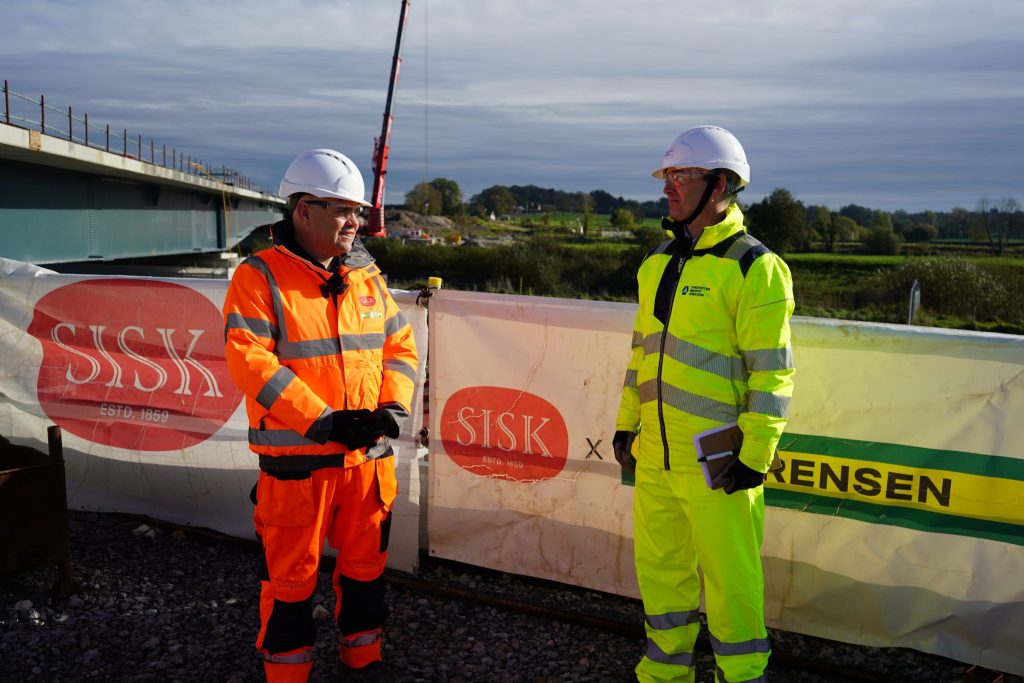
The event’s most visible physical legacy will be a road. The Adare bypass is a 7km section of the wider Foynes to Limerick Road (including Adare Bypass) project, running between new interchanges at Adare and Croagh. Its design and construction contract was awarded to the Sisk Sorensen Joint Venture – John Sisk & Son (Holdings) Ltd and Sorensen Civil Engineering Ltd – with the Government investing approximately €155 million (ex VAT), and the council has scheduled completion for June 2027, ahead of the Ryder Cup. The council has said the overall project will remove in the region of 70–80% of the traffic currently passing through the village, around 17,000 vehicles a day.
A bypass is a placemaking decision for the village it bypasses. In Louth, the Port Access Northern Cross Route in Drogheda showed how relief roads change what a town centre can become. In Adare, the test will be what the main street does with itself once the through-traffic has gone.
*We had the opportunity to join the Construction Industry Federation’s Safety team on site of the bypass construction with Sisk and Sorensen Civil Engineering
The estuary: ports, energy and the west coast
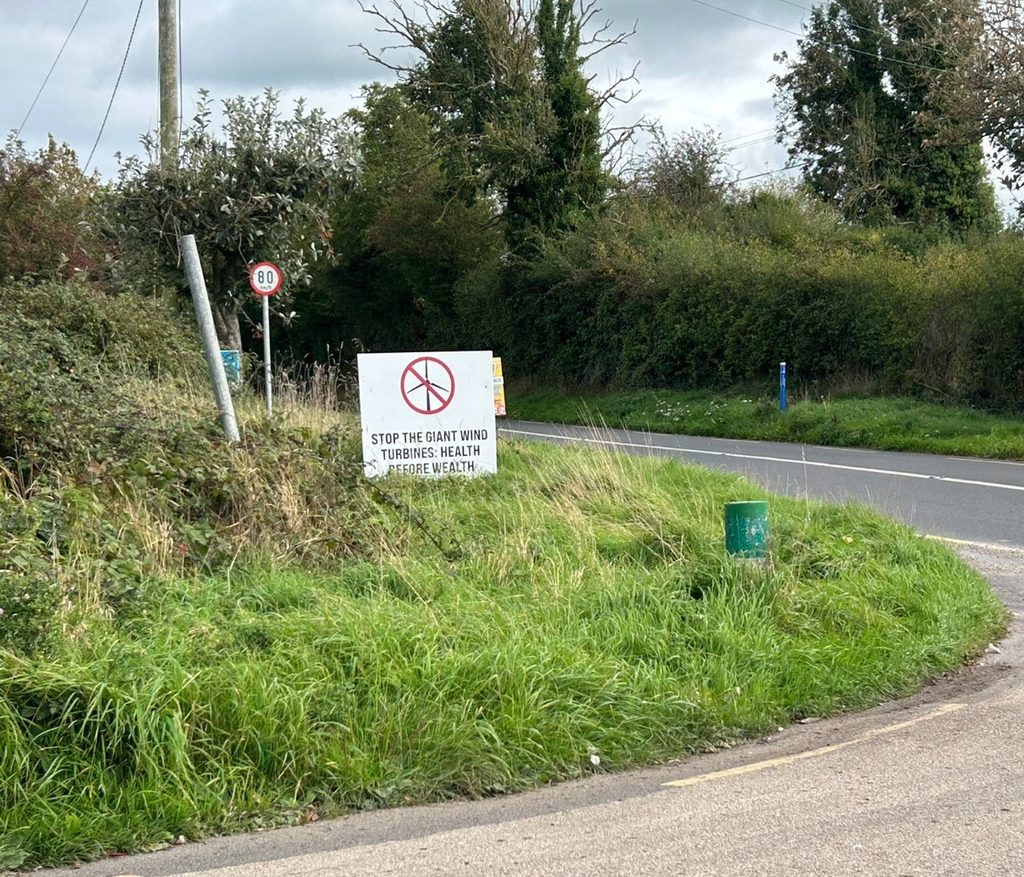
The Adare bypass is the first piece of a road whose real destination is Foynes, and the estuary was the other big Limerick conversation of the fortnight. Just last week, Limerick Chamber, Shannon Chamber and Tralee Chamber Alliance set out a common case, in separate submissions on the Draft National Ports Policy, for placing Shannon Foynes Port and the Shannon Estuary at the heart of west coast growth and offshore renewable energy. Their priorities include coordinated investment in port, road, rail and grid; a clear, time-bound Designated Maritime Area Plan process; recognition of the Foynes Island Deepwater Development as nationally strategic; and a transparent, location-neutral assessment of capacity at the existing Ports of National Significance before major new East Coast capacity is prioritised. Colette O’Connor of Tralee Chamber Alliance put the test plainly: success “should be measured by the jobs, businesses and supply chain opportunities created” across the region.
A week later, on 5 October, Limerick Chamber’s Energy on the Estuary event at Gardens International brought energy, port, digital and industry leaders together, opened by Minister Timmy Dooley. ESB set out its vision for Moneypoint as a site for lower-carbon generation, storage and a renewable-energy hub, and Shannon Foynes Port Company pointed to its Vision 2041 strategy, built around floating offshore wind, green industry and sustainable logistics. The Chamber’s closing message was that energy, digital and enterprise infrastructure should be planned as one coordinated regional system and delivered ahead of demand.
These are the Chambers’ positions, reported as such; Place Engage takes no side on national ports policy. The placemaking note I would add is this. Supply-chain jobs only become place if the towns along the estuary – Foynes, Askeaton, Glin, the road I used to drive – have the homes, schools and main streets to hold the people who take them. On the 2022 census, Foynes was the oldest town of 500 or more people in the county, at an average age of 44.5 (CSO Census 2022 Profile 1, Limerick). It is Hourigan’s point at regional scale: opportunity created where people already are.
IPAV agent Lisa Kearney of Rooney Auctioneers, a regular iProperty Radio contributor, gave us the following insights:
The takeaways for Limerick (so far!)
- First, buying and renting appear to tell very different stories. Achieved prices sit about a fifth below the national line, while new tenants pay close to national rents and nearly half again what sitting tenants pay. On 4 October just 71 homes were advertised to rent across a county of more than 200,000 people, 14 of them outside the city – and 119 council homes in the city stand vacant, some for over a decade.
- Second, Croom shows a pattern the published record only hints at: homes and gardens cared for, community life on the river, new civic investment on the village edge, and a main street of empty shop units. Investment arriving is not the same as investment reaching the street.
- Third, and most important, community capacity is something policy can build or remove. Niamh Hourigan’s account of the 1980s £5,000 grant, and of families moved out again during regeneration, shows how the leaders who held a place together can be the first to go. As the Ryder Cup, the Adare bypass and the estuary bring new money into the county, the test is whether opportunity is created where people already live – in Croom, in Meanus, in Southill and along the estuary.
If one impression stays with me from the week, it is that Limerick is unfinished. Our analysis is incomplete, with the retail work and the market view still to come – and so, in a different way, is the city. A regeneration programme that changed lives but left streets the statistics do not yet see. Council homes waiting years to return to use. An estuary with deep water, grid and land that the Chambers argue the country has barely begun to use. A Ryder Cup and a new bypass that could reshape a village, if the legacy is followed through. For the State’s third city, the overwhelming sense was not of decline but of potential barely tapped: a place that has not yet scratched the surface of what it could be.
As ever, this is a starting point only, and this week more than most it rests on observation rather than conversation. If you live, work, build, buy, sell or rent in Limerick – in the city, in the county towns or along the estuary – does the data match what you see?
Corrections and contributions are always welcome and encouraged: carol@placeengage.com