
🇪🇺 Week 14 of 26: Placemaking in the Garden County – Place Engage comes home to County Wicklow
County Wicklow – my birth county – the second-most expensive county in the State, and the week I have been most curious about and most wary of, in equal measure. It is easy to look at the place you come from and see only what used to be there.
What the published record shows is a county starting far more homes than it is finishing, in a market where only 65 homes were available to rent long-term on the day we looked. The question that followed me from Bray to Baltinglass was whether the schools, roads and services will arrive with those homes.
155,851 people, up 9% since 2016 · only 35% born in the county, third-lowest in the State · average age 39.1, over-65s up 27% · median house price €480,000 (23% above national, 2nd of 26) · new-tenancy rent €1,888, second only to Dublin · 198 completions last quarter, fewest in the Mid-East · 956 homes commenced January–July · residential vacancy 2.4% · 545 homes for sale, 65 to rent long-term, 624 entire homes on Airbnb.
Through iProperty Radio, Place Engage is undertaking a non-political placemaking series across 26 counties throughout the 26 weeks of Ireland’s EU Council Presidency. Each county week builds a Placemaking Data Baseline from primary sources before we arrive, and then our time on the ground is spent listening to people and exploring where the published record tracks lived experience, and where it diverges, amplified by local media – East Coast FM.
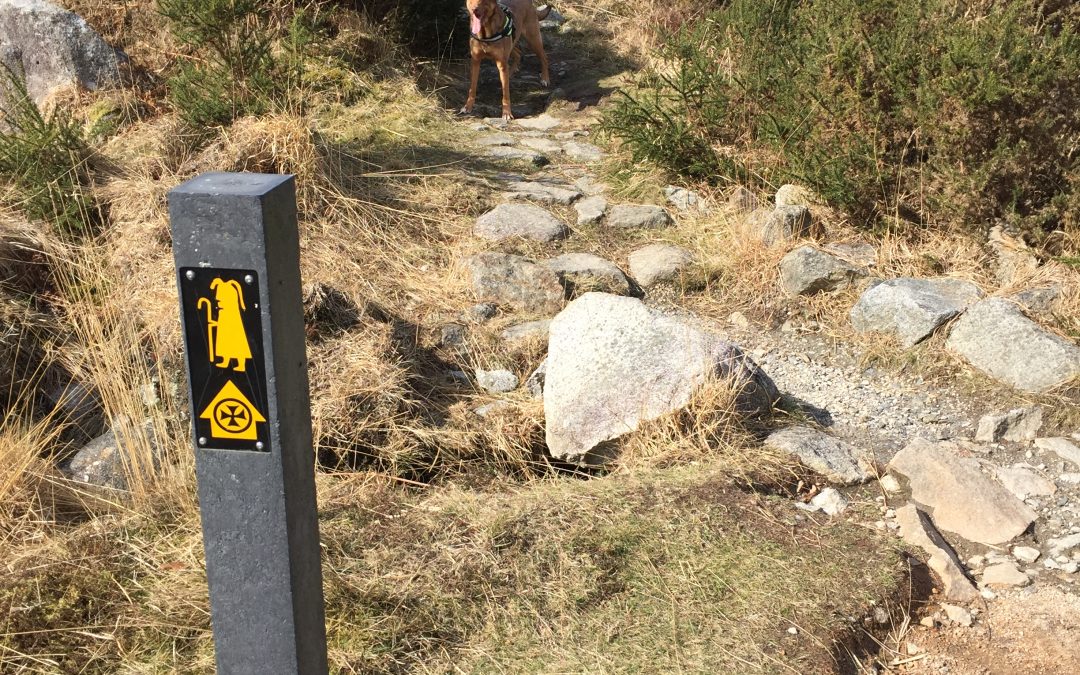
“Faigheann cos ar siúl rud nach bhfaigheann cos ina cónaí” — a walking foot finds something the resting foot never would.

A personal note before the data
Wicklow is the county I was born in, and Grange Con, in the west of the county, is my home village. I went to secondary school in Baltinglass. I also had one of my first teenage jobs at the old Jack White’s on the road south to Arklow – I didn’t last long. So this is the one week of the 26 where I cannot claim to be objective. I know the west of the county far better than the east coast, and for me Wicklow will always look more like the N81 than the N11.
I think a native’s eye is good at spotting what has changed and poor at judging whether the change is working. That is exactly why the data comes first, and why I spent the week asking residents rather than telling them. If I have gotten your town wrong, I would rather hear it from you, please get in touch carol@placeengage.com.

The walking foot: a route through the county
Bray:


We started in the county’s largest town, home to 33,512 people at the last census and the fifth-largest town in the State. The urban realm work of the past decade shows, the Riverwalk especially. There is also visible construction at the Royal Hotel and at Sea Gardens by Ballymore, which holds real promise for the people of Bray. Heading south along the Main Street, though, commercial vacancy is difficult to ignore, with a number of prime units boarded up. One thing deserves credit. Dooley Auctioneers has clearly branded the units it has let along the street but which are not yet occupied, so a passer-by can see that something is coming. It is a simple, yet very effective, signal of confidence, and other towns could learn from it.
One conversation in Bray turned the usual commuter story on its head. A man I met had grown up in Bray, moved to County Dublin for work decades ago, and now lives in Dún Laoghaire, yet finds himself commuting back into Bray regularly for work. The Census measures the flow out of Wicklow towards Dublin. It is worth remembering that some of the traffic runs the other way.
Greystones:


The welcome sign still says “most livable community 2008” . Almost two decades on, I put that line to the residents I met. The seafront was quiet, which may have been the weather on a September weekday. Up towards Church Road, though, there was a steady buzz, a much stronger retail offer than on my last visit a few years ago, and no sign of vacancy. There was certainly no dereliction; I don’t think it would be tolerated here.
The people I spoke with in Greystones were almost all retired and mostly from the county, though two had moved from South Dublin after retiring. That matches the Census closely. Wicklow’s average age rose almost two years in a single census period, from 37.2 to 39.1, and its over-65 population grew 27%, against 22% nationally. Greystones is also where the county’s rents peak. Existing tenancies in the Greystones electoral area average €1,991 a month, the highest of any electoral area outside County Dublin.
Kilcoole and Newcastle:


One of the challenges of exploring East Wicklow is resisting the motorway and sticking to the old road that runs parallel to the sea, which is the only way to actually see the villages. Entering Kilcoole, home of Glenroe, it was good to see construction advancing on St Catherine’s Special School. I didn’t make it to Delgany on this visit, so input from Delgany residents is especially welcome. In Newcastle we didn’t get to speak with residents (because there was not a sould on the street!). We were glad, though, to see good progress on Chancel Way, the development we recorded with local estate agent Derek Byrne almost two years ago: https://youtu.be/eIEB12tdUNY?si=7yK-6rLGDxUrCvC6
Wicklow town:


Here gets my ‘Most Improved’ accolade of the week. The public realm is beautifully kept, with vibrant planting throughout the town. I remember this town during the crash, so the improvement is clear to me. Local IPAV agent Anna Thornton of DNG gives her market view below.
Arklow, Woodenbridge and Aughrim:

In Arklow, it was disappointing to see persistent commercial vacancy and obvious signs of dereliction at the south end of the town. Arklow is also where the county’s price gradient bottoms out among the larger towns. Its 2026 median is €315,000, against €600,000 in Greystones and €1,005,000 in Enniskerry (HousePrice.ie, achieved prices from the PSRA register). From Arklow I took the forestry route through Woodenbridge, where the Woodenbridge Hotel claims a history back to 1608, and came out at a historic, fairytale house that by coincidence is currently for sale (pictured below). In Aughrim, the Lawless Hotel remains empty, and it sets a negative tone on the way into the village. A single large vacant building at a village entrance does more damage to how a place feels than its size would suggest.

Rathdrum and Glendalough:

Visitor facilities around Glendalough appear to be improving, and I am particularly keen to hear from residents here about how that feels from the inside. In Rathdrum, I spoke with two mothers of primary school children. Both were originally from Dublin, and both said they had considered Rathdrum only because they could afford it. Both raved about the quality of life, even though one commutes to Donnybrook a few days a week.
That is the Wicklow commuting story in one conversation. The average journey to work is 33.9 minutes, against 29.1 nationally, and 10,600 people travel an hour or more. Yet 37% of Wicklow workers worked from home at least one day a week at the last census, against 32% nationally (CSO Census 2022). Rathdrum’s 2026 median is €420,001 (HousePrice.ie), lower than the coastal towns and still well above the national line. In Rathdrum, affordability is relative.
Blessington and the west:

Unfortunately, I didn’t have time to stop at the café in Hollywood on my way to the Blessington Lakes, which is always a favourite. In Baltinglass, I passed my old secondary school. The grassy bank where we once sat in front of the school is now a large extension, larger than the original school. One thing hasn’t changed: tractors are still parked in the school car park, if bigger and slightly fancier ones. It says a great deal about the agricultural community the school serves.
Fatima Hall and the old Scouts’ Den are still standing, largely unchanged inside from forty years ago, and I am assured both are still used regularly by the community. The new primary care centre on the site of the old primary school, and the new housing on the convent grounds, are welcome additions. (If anyone remembers The Saw Doctors playing these convent grounds one summer in the 1990s, you would not recognise the place now!)
Crossing the Slaney bridge onto the N81 side of Baltinglass, the picture changes sharply. It was among the worst I saw all week in Wicklow. Shops that were once a mainstay are boarded up with nothing in their place, and the old corner bar site is crying out to be developed. Baltinglass’s 2026 median is €338,736 (HousePrice.ie).
Wicklow has two economies, and the line between them runs roughly along the mountains.
Grange Con:
Finally, home. My village remains largely untouched over five decades, at least. The additions are Grange Con Kitchen, a destination café, and a tapas restaurant in Moore’s. Even a village that has barely changed can pick up somewhere worth driving to, and that is a placemaking lesson on its own.

More homes starting than finishing
The figure I would put at the front of any Wicklow housing conversation is the gap between what is starting and what is finishing.
County Wicklow completed 198 new homes in Q2 2026, the fewest of the four Mid-East counties, against 592 in Kildare, 476 in Louth and 461 in Meath (CSO New Dwelling Completions, Q2 2026). The mix was 141 scheme houses, 41 one-off houses and just 16 apartments. That is 71% scheme housing and 8% apartments, against 54% and 30% nationally (derived). Wicklow delivered about 2.2% of national completions from about 3.0% of the national population (derived).
Commencements tell a different story. 956 homes were commenced in Wicklow from January to July 2026, against 170 in the same period of 2025 – more than five times as many. Of these, 179 were apartments and 94 were one-off houses (Department of Housing, Residential Commencement Notices). In February alone, Wicklow recorded 496 homes commenced, the second-highest of any local authority that month, behind only Dublin City
The two series measure different things and should not be combined. Commencements are notices that building is about to start; completions are homes connected to the grid. A commencement is a statement of intent, not a home, and 2025 is widely regarded as a low base nationally. Even so, the direction is unambiguous: Wicklow’s pipeline has filled up far faster than its output. Apartments make up a far larger share of what has been commenced than of what has been completed, which is important for an unaffordable county with very few apartments.
Two further signals sit alongside that. Residential vacancy is 2.4%, against 3.7% nationally (GeoDirectory, Q2 2026). With so little empty stock to bring back into use, the county’s housing has to be built rather than recovered. The Census gives the longer frame: a stock of 59,629 dwellings in 2022, with 3,334 vacant on census night and more than 667 vacant in both 2016 and 2022. Seventy-one per cent of households owned their home and 24% rented, against 66% and 28% nationally. Homes rented from private landlords fell 1% while the population grew 9% (CSO Census 2022).
The second-most expensive county in the State
On the transaction record, Wicklow’s median house price was €480,000 in 2026 to date. That is up 7.9% on 2025, 23% above the national median of €390,000, and 2nd of 26 counties (HousePrice.ie’s county page for Wicklow, drawn from the PSRA Residential Property Price Register; 1,339 sales, data updated 23 September 2026). These are achieved prices, meaning what buyers actually paid. They are distinct from the asking prices in the Daft.ie snapshot below.
Two things in the detail stand out. First, the apartment is not the least expensive home in Wicklow, as it was in every county we baselined before it. The median apartment sold for €405,000, above the end-of-terrace median of €370,000. Detached houses sold for €650,000, semi-detached €506,000, terraces €451,000 and bungalows €450,000. Second, the long arc is gentler than the level suggests. Wicklow’s median rose from €326,500 in 2020 to €480,000, about 47%, against about 57% nationally over the same period (derived). Wicklow is expensive, but the rest of the country has been closing the gap.
Rents follow the same pattern. New tenancies in Wicklow averaged €1,888 a month in Q1 2026, second only to Dublin, up 10.5% year on year and about 2.7% above the national €1,839. Existing tenancies averaged €1,437, about 5% below the national figure. A household moving home in Wicklow faces a gap of €451 a month compared with a sitting tenant (RTB/ESRI Rent Index, Q1 2026; gaps derived). The RTB cautions that the Q1 rise coincided with the revised rent rules from 1 March 2026, and that it is too early to say how much is a one-off adjustment. Note that these are Q1 2026 figures, so they should not be compared directly with the Q4 2025 rents in earlier county weeks.
The short-let squeeze
On a live capture on 26 September 2026, there were 545 homes for sale across the county and 65 available to rent long-term (Daft.ie), while a same-day capture found 624 entire homes on Airbnb. That is roughly ten whole homes offered to visitors for every one offered to a long-term renter, and one long-term rental listing for roughly every 2,400 residents (derived). This is a live platform snapshot, not a trailing-listings measure, and the platforms are not directly comparable. For context, Meath’s equivalent was about one per 2,900 residents.
The view from the market
To test the baseline against someone close to the transactions, I spoke to Anna Thornton, Managing Director of DNG Thornton Properties, which has offices in Wicklow town and Arklow and covers most of the county. Her account of the last couple of months is of a market splitting at a single price point.
Below that point, first-time buyers dominate, and their affordability is being stretched. On her account, first-time buyers are now buying at up to around half a million euro, a very large figure for a first purchase. Homes priced up to that level have been drawing strong interest, plenty of buyers and active bidding.
Above half a million, the summer was slower. Her reading is that buyers in that bracket are often trading up from smaller homes with young families, which makes them a more cautious and more complicated cohort. She also suggests that, after what she called a phenomenal summer, some of them simply had their minds on things other than property.
That threshold sits almost exactly on the county median. Wicklow’s 2026-to-date median is €480,000, and HousePrice.ie’s monthly medians have hovered around €500,000 through the summer: €510,000 in July, then €495,000 in August and €492,500 in September, both still provisional (HousePrice.ie, PSRA register, data updated 23 September 2026). Wicklow town’s median, at €487,500, sits just inside the band she describes, and Arklow’s, at €315,000, sits well inside it.
If first-time buyers are competing hard up to €500,000 and the market above it is quieter, then the county median is being set by first-time buyers stretching to their limit. That is the affordability ceiling the series has been tracking, as it shows up in a single county.
Her second observation explains why so many Rathdrum and west Wicklow conversations went the way they did. Hybrid working still shapes demand, and she reports particular interest in country homes with good gardens, good views and room for a home office, which buyers in her area are loving at the moment. That fits the Census. Thirty-seven per cent of Wicklow workers worked from home at least one day a week in 2022, against 32% nationally (CSO Census 2022). It also fits the two Rathdrum mothers who came for affordability and stayed for the quality of life.
What the two observations share is that demand in Wicklow is strong but not unlimited. Below €500,000, buyers are being pushed to their borrowing limit. Above it, buyers can afford to be choosy, and are prioritising space and setting.
These are a practitioner’s observations of the market her firm transacts in, not a county-wide statistic. They are reported as her account.
The week’s local media stories: who plans, who pays, who keeps up

Three Wicklow stories broke while we were in the county. Each is a placemaking question that reaches well beyond Wicklow:
- Charlesland and the Call for Sites: The Journal reported this week on the former Charlesland golf course on the eastern edge of Greystones, a 148-acre site that closed in late 2020. About 84 acres of it could be zoned for residential use, and a developer’s submission to the council suggests it could hold up to 1,600 homes. The council’s Call for Sites consultation closes later this month, with a final rezoning vote due in January. All of Greystones’ councillors have jointly raised concerns about schools, congestion on the N11/M11 corridor and a stalled park-and-ride, and one councillor put the number of planning permissions granted but not activated in Wicklow at over 3,000 [this is the councillor’s figure, not a published statistic]. Separately, East Coast FM reported in April that the council’s elected members had backed a variation to the County Development Plan 2022–2028 to support delivery of about 5,500 further homes across 128 hectares of already-zoned land.
I was asked to contribute to this news article, following observations shared on local radio – East Coast FM – earlier that day. For a developer weighing the sites in front of them, it is logical to avoid the more expensive and more viability-challenged development when there is an easier win, and a central site near the DART is an easier win. I also said it would be a really painful process for current and new residents, that there will be a lag between new estates and the schools and transport they need, and that the area will actually get there in the end. I stand by all of that. I would add one thing the data makes plain: in a county with 2.4% vacancy, homes have to be built, and the real test is whether the infrastructure follows quickly enough to keep residents’ trust. That trust is the gap my own research is concerned with, and it is closed by informed participation at the framework stage, not consultation once the scheme is drawn.
- The differential rent review: Wicklow County Council has postponed new rents for its social housing tenants from 3 October to 7 November 2026. The decision followed an emergency council meeting on 28 September, held while tenants protested outside County Buildings, as reported by the Irish Independent. According to the council:
- It merged two differential rent schemes, one for Bray Municipal District and one for the rest of the county, into a single scheme.
- The new scheme sets a €30 weekly minimum, removes the previous €200 weekly maximum, and stops counting child maintenance and carer’s allowance as income.
- It recalculated 4,519 rent accounts. Its examples ranged from a pensioner’s rent rising from €38.10 to €48.50 a week to a working parent with two dependants going from €69.20 to €124.
- It found some households with net incomes above €120,000 (not a typo, but surely a problem), now facing weekly rents above €500.
The last review was in 2019. A motion to halt the increases is due before the council’s October meeting, and there is a reported difference of view over whether such a motion is within members’ powers.
I don’t take a side on the scheme. The placemaking lesson is about process. An income-based rent system that is reviewed only once every seven years, and poorly explained, will make a routine adjustment feel like a sudden increase. The policy can be sound and still fail in delivery. But households with income in excess of €120,000 in social housing do not seem right or fair.
- Community capacity, built from within: The most hopeful story of the week came out of Blessington. Two community organisations, Blessington Allotments Campaign and Blessington Tourist Office, have launched sustainabilityplan.ie. It is a free tool to help community groups, schools, sports clubs and small businesses assess their sustainability performance, set measurable goals and build their own plan. Wicklow Public Participation Network hosted an information session on it during SDG Week and Wicklow Climate Action Week. In Kilkenny, I described harnessing and maintaining community capacity as the weakest part of Ireland’s placemaking puzzle. In Blessington, volunteer groups have turned their own experience into a shared tool, so the capacity is built by the community rather than delivered to it. Two things suggest it could last. It sits inside the PPN structure that links groups to their local authority, and it is designed to strengthen the funding applications that keep small groups going.

The takeaways for Wicklow
Three things stand out from the Week 14 file.
- First, Wicklow is starting far more homes than it is finishing. It recorded the fewest completions in the Mid-East last quarter, yet commencements this year have run at more than five times last year’s level, with a far higher apartment share than its completions. Whether those starts become homes, and whether schools, transport and water keep pace, is the question for the next two years. Charlesland is where that question is being argued in public right now.
- Second, Wicklow is the second-most expensive county in the State, but it is two counties in one. On the coast, prices run from €600,000 in Greystones to over €1 million in Enniskerry and existing rents reach the highest outside Dublin. Inland and to the south, Arklow, Baltinglass and Aughrim show the vacancy and dereliction the coastal averages hide. A county average describes neither.
- Third, on the ground the week was about people as much as property. Retirees populate Greystones’ Church Road. Two Dublin-born mothers chose Rathdrum because they could afford it and stayed for the quality of life. A Bray man commutes back into the town he left. And two Blessington volunteer groups built a tool for everyone else. Only 35% of Wicklow’s residents were born here, and the county is being made, every day, by the people who chose it.
As ever, this is a starting point only, and in my own home county more than anywhere I want to be corrected. I would especially like to hear from Delgany, Glendalough, Rathdrum, Aughrim and Arklow. Does the data match what you see? Corrections and contributions are always welcome: carol@placeengage.com